
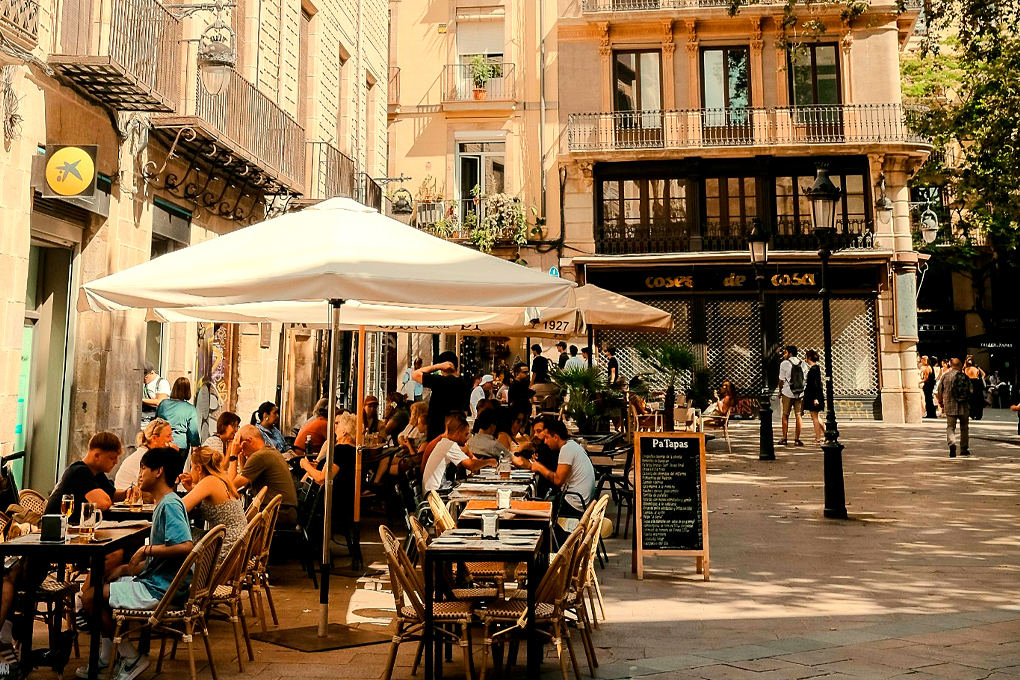
If you're coming to Barcelona between June and September, here's the honest version: summer is probably the best time of year to experience the city — but it can also wreck your trip if you don't plan it like a local. The combination of Mediterranean heat, high humidity from the sea, and stone streets that hold the warmth turns improvised sightseeing into an exhausting day. This is the guide we give every traveler before a summer tour: what to expect, what to pack, when to walk, and when to stop.
We're local guides born and raised in Barcelona. We've been running tours here through July and August for years. The visitors who enjoy summer in Barcelona aren't the ones who push through the heat — they're the ones who learn to move with the city's rhythm.
What Summer in Barcelona Is Actually Like
Forget the averages you've seen online. Here's what you'll actually find on the ground.
Those are the comfortable averages. What you need to know is what the numbers don't show: during heatwaves, Barcelona regularly hits 100–104°F (38–40°C) for 3–7 days in a row, mostly between mid-July and mid-August. Humidity stays at 70–80% all summer, which makes 86°F (30°C) feel like 97°F (36°C).
This is the part that catches visitors off guard. Barcelona isn't dry heat like Madrid or Seville. It's the kind of heat where your sweat doesn't evaporate, your body can't regulate, and you crash much faster than you expected. The good news: knowing this changes everything.
From 1:00 PM to 5:00 PM, locals literally disappear from the streets. If you're walking the Gothic Quarter or El Born at that hour in August, you'll be the only ones outside — and you'll feel it.
The 3 Mistakes Visitors Make Every Summer
After years of running tours, these are the three patterns that ruin most travelers' days in Barcelona between July and August.
- Walking between 1:00 PM and 5:00 PM. The four hardest hours of the day. Locals vanish. The stone streets of the Gothic Quarter and El Born radiate heat like ovens. Plan museums, lunch, or a hotel break during this window — not sightseeing.
- Underestimating UV radiation. Barcelona hits UV index 8–10 in summer (the scale only goes to 11). A single hour without sunscreen will burn you. Sunglasses without real UV protection are useless.
- Not drinking enough water. The humidity makes dehydration sneak up on you. By the time you feel thirsty, you've already been dehydrated for a while. The fix is simple: small sips constantly, not big gulps when you crash.
10 Essential Precautions for Summer Tours in Barcelona
These are the recommendations we give every client before any tour between June and September.
1. Drink Water Before You're Thirsty
Always carry at least a half-liter (16 oz) bottle. For longer tours, a full liter. Take small sips every 10–15 minutes — don't wait for thirst. Good news: Barcelona tap water is safe to drink and the city has dozens of public fountains in the center (the classic fonts de Canaletes) where you can refill for free.
2. Broad-Spectrum Sunscreen, SPF 50+
Not the SPF 15 you wear at home. Minimum SPF 50, sweat-resistant, reapplied every 2 hours when outdoors. Watch the often-forgotten spots: back of the neck, ears, tops of feet (if you're in sandals), and back of the hands.
3. Wide-Brim Hat or Cap
This isn't optional. A standard baseball cap protects your head but leaves your neck and ears exposed — exactly where sunstroke starts. A wide-brim hat or a cap with a neck flap (yes, the legionnaire-style — it looks odd, but it works) is the smart choice.
4. Real UV-Blocking Sunglasses
Not five-dollar fashion glasses. You need UV 400 protection or category 3 lenses. UV radiation damages the retina invisibly. Cheap sunglasses without real protection are worse than wearing none, because your pupils dilate behind them.
5. Light, Light-Colored, Breathable Clothing
Natural fabrics: cotton, linen, viscose. Avoid polyester and dark colors, which trap heat and sweat. Counterintuitive tip: a lightweight long-sleeve shirt or pants protect you better than shorts and a tank top during long outdoor stretches — they block the sun while still letting your skin breathe.
6. Comfortable Closed Shoes (No Flip-Flops)
Tours through the Gothic Quarter and El Born involve walking 1.5–2.5 miles on cobblestones. Flip-flops are a mistake: guaranteed blisters and chafing. Go with lightweight sneakers or sport sandals with proper support. Never break in new shoes on vacation.
7. Plan Your Day on Local Time
- Early morning (8:00–11:00 AM): Best for outdoor sights — Park Güell, Sagrada Família exterior, Barceloneta beach.
- Late morning (11:00 AM–1:00 PM): Markets (Boqueria, Sant Antoni) and air-conditioned museums.
- Siesta hours (1:00–5:00 PM): A long lunch, an air-conditioned museum, or — what locals actually do — a nap at the hotel.
- Late afternoon (5:00–8:00 PM): Back outside. Strolling, shopping, exploring.
- Evening and night (8:00 PM onward): The golden window. Terraces, tapas, walks. This is when Barcelona shows its best face.
8. Know Where the Climate Shelters Are
Barcelona has an official network of climate shelters: libraries, museums, community centers, shaded parks, cool churches. They're free and marked with signage across the city. If anyone in your group starts struggling, walk into the nearest one. Don't wait.
9. Eat Light (And Mediterranean)
Skip the heavy breakfasts and big midday meals. Your body won't process them well in this heat.
- Breakfast: Fruit, yogurt, coffee, pa amb tomàquet.
- Lunch: Salads, gazpacho, salmorejo, esqueixada, grilled fish.
- Dinner: This is when you eat properly. Tapas, paella, grilled meats. There's a reason locals eat dinner late.
Avoid alcohol at midday. One beer with lunch is fine. A pitcher of sangria at 2:00 PM in the sun is the perfect recipe for ruining your afternoon.
10. Listen to Your Body
Sudden headache · Dizziness or unsteadiness · Nausea · Hot, dry skin (no sweat) · Confusion or disorientation · Rapid pulse
If you notice any of these, find shade, sip water slowly, wet the back of your neck and wrists with cold water, and rest. If it doesn't improve within 15 minutes, call 112 (emergency services) or ask the nearest local for help. Barcelonians are used to this — we'll help without asking questions.
Our tours start at sunset for a reason. Want to see why?
See the Tapas & Wine TourWhy Our Tours Run in the Evening (and Early Morning) in Summer
Many travelers ask why none of our tours start at 11:00 AM. The answer is simple: we don't want our guests to suffer. The hours we've chosen aren't random — they're the windows when Barcelona is actually pleasant.
We start at sunset, when the terraces come alive, the heat softens, and Catalan bodegas hit their best hour of the day.
Squares fill up at dusk, the Castellers begin their training, and the heat finally lets go. The exact moment to be in Gràcia.
An early morning slot: the market in full swing, the air still cool, and home before the midday heat takes over.
This is the local way of seeing Barcelona. And no — it's no accident.
What to Pack in Your Day Bag
One small backpack with the essentials. Nothing more — the more you carry, the worse you'll feel.
- Reusable water bottle (half-liter / 16 oz minimum)
- SPF 50+ sunscreen (small bottle for reapplying)
- Hat or cap with neck coverage
- UV 400 sunglasses
- A hand fan (you'll see locals carrying them — it's not aesthetic, it works)
- A bandana or scarf (wet it and use it on your neck and wrists)
- Cooling face wipes
- Some cash (small neighborhood bars don't all take cards)
- Phone charged to 100% before leaving
- A spare T-shirt for long tours — changing at the end transforms the day
Plan B: What to Do During a Heatwave
If you arrive and find 100°F+ (38°C+), don't push through your original itinerary. This is what locals do:
Beach Day
Barceloneta, Bogatell, Mar Bella. Swim, dry off, repeat. The Mediterranean at 75°F is the best air conditioning Barcelona offers.
Air-Conditioned Museums
Picasso Museum, MNAC, MACBA, CCCB. Cool, affordable, often free for first Sundays. Spend the whole afternoon if you need to.
Boqueria Market in Late Morning
Wait until 11:30 AM when the tour groups thin out. Natural fruit slushies, fresh juices, cold gazpacho. Real cold relief, not gimmick.
A Long Catalan Lunch
Find a restaurant with a shaded terrace and a fan. Order a long lunch with cava and lots of small plates. Three hours of slow eating beats three hours of melting in the sun.
If you've already booked one of our tours and an extreme heat red alert hits, contact us. We'll shift the schedule or reschedule at no cost. Your safety is the priority.
The Bottom Line: Summer in Barcelona Is Beautiful — If You Plan It Right
Barcelona in summer isn't Andalusia. It isn't Rome. It isn't Lisbon. It has its own climate, its own humidity, and its own rhythm.
But respect three basic things — avoid the 1:00–5:00 PM window, hydrate constantly, and protect yourself from the sun — and you'll have one of the best travel experiences of your life. Long Mediterranean evenings, golden light on Modernist façades, terraces full of locals, beach swims at midnight, and food that tastes better because the day cooled down before dinner.
And if you want to discover the city at the hour locals actually go out — at sunset, when the city softens and starts to live — that's exactly what our tours are designed for.
Frequently Asked Questions About Barcelona in Summer
Not too hot — but demanding. July and August averages are 82–90°F (28–32°C) with heatwaves often pushing past 100°F (38°C). High humidity intensifies the feeling. The trick is to plan around the heat (early mornings, evenings, indoor activities at midday) rather than against it.
June and September offer the best balance: warm but bearable temperatures (75–84°F), fewer tourists, and perfect Mediterranean light. July and August are more demanding but reward you with festivals, beach culture, and long nights.
Yes — as long as the tour is scheduled for the right hours (early morning or evening), and you come hydrated, sun-protected, and properly dressed. Avoid midday tours. Reputable local operators schedule outside the 1:00–5:00 PM window for exactly this reason.
Light cotton or linen clothing in light colors, a lightweight long-sleeve shirt or pants for extended outdoor time (they actually protect you better than shorts and a tank top), comfortable closed shoes (not flip-flops), a wide-brim hat, UV 400 sunglasses, and a thin layer for air-conditioned interiors.
Yes. Tap water in Barcelona is safe and good quality. There are also dozens of free public drinking fountains (the classic fonts de Canaletes) across the city center where you can refill a reusable bottle.
Find shade immediately, sip water slowly, cool your neck and wrists with cold water, and rest for at least 30 minutes. Warning signs: severe headache, dizziness, nausea, hot dry skin without sweat, confusion. If you don't improve within 15 minutes, call 112 (Spanish emergency line).
Reputable operators adjust them. At Barcelona Born and Bred, if a red heat alert is issued, we contact our clients to shift the schedule or reschedule at no cost. Our tours run at sunset or early morning precisely to avoid this issue in the first place.
Discover Barcelona when locals actually go outside.
Our small-group tours are scheduled around the heat — not against it. Sunset start, real neighborhoods, real food, real local guides.
Book the Tapas & Wine Tour