
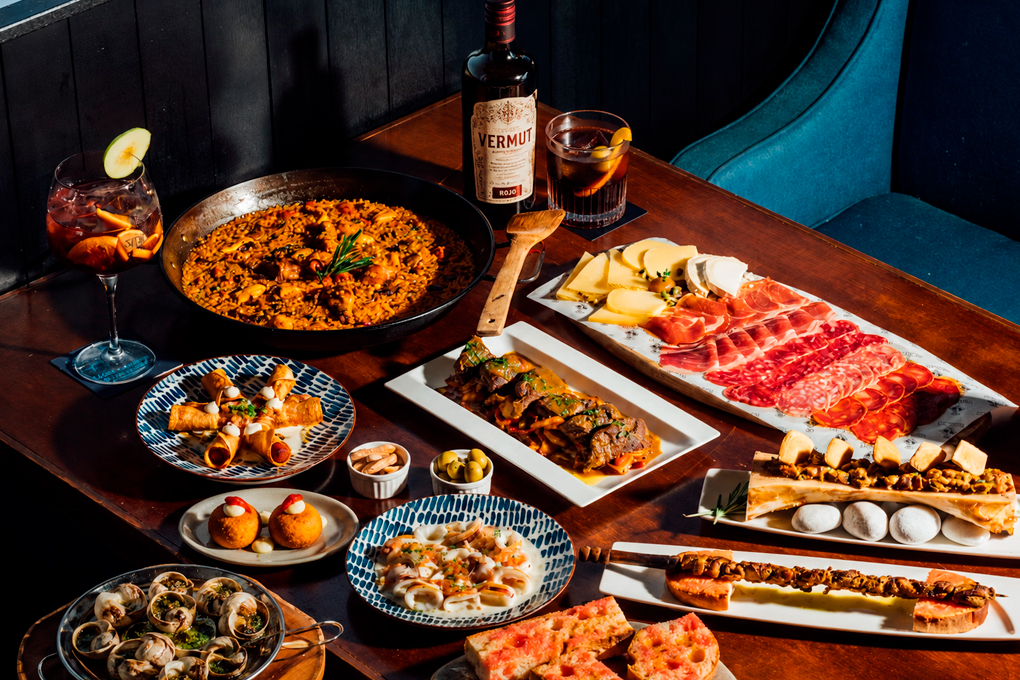
If you've searched "best tapas in Barcelona" on Google, you already know the problem: the top results take you to the same ten bars in the city center, all with laminated menus, oversized photos at the entrance, and a host pulling you in from the doorway. Those aren't the best tapas bars in Barcelona — they're the bars with the best SEO. This is the guide we usually save for our clients: what a local would order, where they'd order it, and why.
At Barcelona Born and Bred, we're local guides born and raised in the city. We've spent years taking travelers to the places where Barcelonians actually eat — not the ones paying for ads on TripAdvisor. This isn't a "50 best bars" list copied from the internet. It's the way we do it ourselves.
What Are Tapas? (And Why Barcelona Is Different)
Here's something almost no guide explains and that will save you a lot of confusion: Barcelona isn't a tapas city like Seville, Granada, or San Sebastián.
Historically, Catalonia's food culture is different. What's always been eaten here is the vermut at noon with olives, marinated anchovies, and chips from the bag. Pa amb tomàquet with cured meats. Platillos (small plates to share) with a good wine from Penedès or Priorat. And, above all, long Sunday lunches with family.
The culture of going from bar to bar for small plates became increasingly common in Barcelona with the great migration waves from southern Spain in the 1950s, 60s, and 70s. Andalusians, Extremadurans, and Murcians brought their customs, their bars, and their tapas. The city absorbed them and made them its own. The result: today in Barcelona, two food traditions live side by side on the same walk.
If you want to understand the custom itself — how it works, when locals go out and how to move from one bar to another — read our complete guide to tapeo in Barcelona .
The interesting part isn't choosing one tradition over the other — it's knowing both exist and ordering accordingly when you sit down at a good bar.
The 10 Tapas You Have to Try in Barcelona
These are the ones we'd order if we only had one day in the city. Not in order of importance — in the order you'd try them on a perfect tapas crawl.
1. La Bomba
A ball of mashed potato stuffed with seasoned ground meat, breaded and fried, served with two sauces: a white one (alioli) and a red one (spicy). It was invented at La Cova Fumada in Barceloneta during the 1950s. Legend says it's called "bomba" because its shape resembled the bombs anarchists threw in the neighborhood during the Spanish Civil War. The reality is simpler: it's one of the best tapas you'll ever eat.
2. Pa amb Tomàquet With Ham
The simplest tapa and the most Catalan. Toasted bread rubbed with a ripe tomato, a drizzle of olive oil, salt, and Ibérico or Serrano ham on top. Looks like nothing. Tastes like everything. If a bar doesn't offer pa amb tomàquet, it's not a Catalan bar. It's that simple.
3. Esqueixada
A cold salad of shredded raw salt cod (cured and then desalted), with tomato, onion, green peppers, and black olives. It's Catalonia's answer to ceviche, eaten mostly in the summer. Refreshing, salty, and perfect with a vermut.
4. Escalivada
Red peppers, eggplant, and onions slowly roasted in the oven until almost caramelized. Served cold, peeled, dressed with olive oil and salt. Sometimes topped with anchovies. One of the most underrated vegetarian tapas in the city.
5. Croquetas de Pollastre Rostit
Forget industrial croquettes. The good ones in Barcelona are made with leftover chicken from Sunday's roast, mixed with homemade béchamel. The filling has to be so creamy it almost spills out when you bite into them.
6. Andalusian-Style Calamari
A legacy of the migrations from southern Spain. Squid rings coated in flour (no egg, that's important) and fried at high heat so they stay crispy outside and tender inside. Lemon on the side. Cold beer. Done.
7. Patatas Bravas
The most universal tapa, and the most mistreated in Barcelona. In 9 out of 10 bars, you'll get fried potatoes with ketchup and a splash of tabasco. That's not bravas.
Authentic patatas bravas come with two sauces: a brava sauce (paprika, vinegar, flour and stock — moderately spicy) and homemade alioli. In some bars they're served with only the brava sauce; in others with both. But ketchup never appears.
8. Buñuelos de Bacalao
Small fried balls of dough mixed with shredded salt cod. Especially popular during Lent. Crispy outside, fluffy inside, salty but not overpowering. A grandfather's tapa that still works perfectly today.
9. Boquerones en Vinagre
Anchovy fillets marinated in white vinegar, garlic, and parsley. Served cold on a slice of bread. It's the simplest tapa on the list and yet the one that separates good bars from bad ones: if the anchovies aren't fresh, you'll know on the first bite.
10. Trinxat de la Cerdanya
A lesser-known winter tapa but absolutely worth seeking out. Cabbage, potato, and either pork belly or black butifarra sausage, all mashed together and browned in a skillet. Originally from the Catalan Pyrenees. Order it if you see it on the chalkboard — many bars don't have it, and those that do tend to make it very well.
Want a local to walk you to all of these in one night?
Book the Tapas & Wine TourWhere to Eat Tapas in Barcelona: The Four Neighborhoods That Matter
Not all Barcelona neighborhoods are equal when it comes to eating tapas. These are the four that matter — and why.
El Born — The Heart of Barcelona's Tapas Scene
El Born is, in our opinion, the best neighborhood in Barcelona for tapas. Its narrow medieval streets hide centuries-old bodegas, vermouth taverns, modern tapas bars, and restaurants that blend tradition with innovation. It hasn't fully turned into a tourist trap. There are still bars where locals go every day, where the bartender recommends what came in fresh that morning, where you can order a vermut at noon and nobody looks at you funny.
Where to look: around the Born Market, the streets surrounding Santa Maria del Mar, and the alleys heading down toward Via Laietana.
The Gothic Quarter — Watch Where You Sit
The Gothic Quarter is beautiful. It's also where most of the city's tourist traps are concentrated. But if you know where to look, there are excellent tapas bars here. Basic rule: stay away from Plaça Reial, the area around the Cathedral, and any spot with a host inviting you in from the doorway. Good bars don't need hawkers.
Where to look: the small streets almost nobody walks down — inner alleys, tiny squares with a single tree, bars with four tables inside and two outside.
Gràcia — Real Neighborhood Tapas
Gràcia is where Barcelonians go out for tapas without tourists. Period. In Gràcia, you eat alongside neighbors, not travelers. Its squares (Plaça del Sol, Plaça de la Virreina, Plaça de la Vila de Gràcia) are perfect for sitting on a terrace with a plate of patatas bravas and a cold beer at sunset. We go deeper into this neighborhood in our article on Gràcia, Castellers and craft beer.
Where to look: any of the main squares at sunset, plus the streets connecting them.
Sant Antoni — The New Tapas Scene
Ten years ago nobody went to Sant Antoni specifically for tapas. Today it's one of the most interesting neighborhoods in the city. The renovation of the Sant Antoni Market in 2018 changed everything: modern tapas bars, new vermouth bars, places where Catalan cuisine is being reinterpreted with creativity. If you want to see where Catalan tapas are heading, Sant Antoni is the neighborhood.
Where to look: around the Sant Antoni Market, especially on Sunday mornings.
5 Rules to Avoid Tourist Traps
After years of taking travelers around Barcelona, we've identified the clear signs of a bad tapas bar. If you see any of these, keep walking.
- Menus in 8 languages or with photos. A good tapas bar has a chalkboard in Catalan or Spanish, a short menu, and often no photos at all. If there are massive laminated photos at the entrance, walk away.
- A host at the door trying to bring you in. Good bars don't need to invite you. They have a line or they have regulars. Period.
- Sangria as the headline drink. Sangria in Barcelona is for tourists. Locals drink vermut, beer, Penedès wine, or cava. If a bar advertises "pitchers of sangria," it's a tourist trap.
- Paella on the menu. Paella is Valencian, not Catalan. A good Catalan bar rarely serves paella. If it does and it's on a chalkboard next to laminated photos, that paella came out of a freezer.
- Located on La Rambla, Plaça Reial, or across from the Cathedral. Those areas have such high rents that bars can only survive by charging tourist prices for mediocre food. Not an absolute rule, but you'll be right 95% of the time.
What Time Do People Eat Tapas in Barcelona?
This matters because many travelers arrive in Barcelona with northern European meal schedules and find the bars empty at 6 PM, assuming they're closed. They're not — the timing is just different.
A good time to eat tapas like a local is 8:00 PM – 10:00 PM on weekdays, or 1:00 PM – 2:30 PM on Saturday at noon. Show up before 8:30 PM and many kitchens are still prepping.
The Most Authentic Way to Discover Barcelona's Tapas
We've given you the tapas, the neighborhoods, the schedules, and the rules. But there's one part that can't be passed through a blog post: the experience of walking into a century-old bodega with someone who knows the owner, who knows what to order on that specific day, who can translate the chalkboard written in Catalan.
That part we do in person. On our Tapas & Wine Tour through El Born and the Gothic Quarter, we take you to 4 carefully chosen bars over 3 hours. Small groups (maximum 10 people). Tapas that change with the season. Catalan wines paired with each stop. And a local guide telling you the story behind every bite. It's not a checklist tour — it's the night you'd have if you came to visit us at home.
Four hand-picked bars, seasonal Catalan tapas, paired wines, and a guide born and raised in Barcelona. Small groups, max 10 people.
Not sure which experience fits your trip? Explore all our Barcelona food tours, or discover our private and tailored food tours for an experience designed around your group.
Frequently Asked Questions About Tapas in Barcelona
The most representative tapas in Barcelona are the bomba (originally from Barceloneta), pa amb tomàquet with ham, esqueixada (cold salt cod salad), escalivada (roasted vegetables), roasted chicken croquettes, salt cod fritters, and authentic patatas bravas with brava sauce and alioli.
The four best neighborhoods for tapas in Barcelona are El Born (the most authentic), the Gothic Quarter (with care to avoid the tourist hotspots), Gràcia (real neighborhood tapas), and Sant Antoni (the new gastronomic scene).
Yes, although historically it isn't a tapas city like Seville or Granada. In Barcelona, two traditions coexist: traditional Catalan tapas (vermut, pa amb tomàquet, esqueixada) and Spanish tapas inherited from the southern Spanish migrations (tortilla, bravas, calamari).
People in Barcelona eat dinner late: between 9:00 PM and 11:00 PM. Before 8:30 PM, many bars are still prepping and the kitchen may not be ready. To eat tapas like a local, the ideal window is between 8:00 PM and 10:00 PM.
On your own, an honest tapas crawl in neighborhoods like El Born or Gràcia costs between 25 and 40 euros per person including drinks. In tourist traps along La Rambla, you'll pay more for worse food.
No. Authentic patatas bravas are served with brava sauce (based on paprika and vinegar) and alioli. Any bar that serves potatoes with ketchup and tabasco isn't making bravas — it's making fried potatoes with sauce.
El Born and Gràcia are the two neighborhoods where authentic tapas culture is best preserved, far from laminated menus and tourist hawkers. Sant Antoni is the emerging new scene, and in the Gothic Quarter there are hidden gems if you know how to avoid the most touristy areas.
The best tapas in Barcelona aren't where the guidebooks send you.
They're in El Born bodegas, Gràcia neighborhood bars, and Sant Antoni's new wave. Let a local guide walk you to the right ones.
Book the Tapas & Wine Tour