

There's a small moment every Sunday morning between June and September when Barcelonans walk out their door with a beach bag, head to Sants or Plaça Catalunya station, and disappear up or down the coast for the day. They come back ten hours later, slightly sunburned, full of grilled fish and white wine, and completely happy. This is the local way to do beaches near Barcelona — and you don't need a car to do it. A train ticket, a swimsuit, an appetite, and you're set.
Barcelona is one of the few major European cities with real Mediterranean beaches within easy reach — sandy ones, with restaurants, lunch terraces, and locals who've been swimming there for decades. This is a local's guide to the best beaches near Barcelona by train (and one direct coach), with a proper lunch stop for each one.
How to Get to the Beaches Without a Car (the Basics)
Most of the best beaches near Barcelona are reachable on the Rodalies de Catalunya commuter train. Two lines do most of the work, plus a direct coach for the one Costa Brava classic that isn't on the rail network:
- R1 — North: from Barcelona Sants and Plaça Catalunya up the Maresme coast (Caldes d'Estrac, Sant Pol de Mar, Calella). Sandy, low-key, family-friendly beaches.
- R2 Sud — South: from Barcelona Sants and Passeig de Gràcia down through the Garraf coast (Castelldefels, Garraf, Sitges). More dramatic landscape, livelier towns.
- Direct coach — Costa Brava: Pujol or Sagalés from Estació del Nord to Tossa de Mar. Around 1h 20min, the easiest way to reach the southern Costa Brava without driving.
Rodalies tickets are cheap (around €4–5 one way to most stops), trains run every 20–30 minutes, and the ride is between 30 and 60 minutes depending on the destination. Buy at the station machines or use the Rodalies app. Coach tickets to Tossa cost around €13 one way and can be booked online with Sagalés or Monbus.
South or North? How to Decide
Most Barcelonans pick a side and stick with it for the season. Try one of each on consecutive Sundays and you'll quickly figure out which coast suits you better.
The Urban Option: Barcelona's Own Beaches
Before going further afield, a quick word on the city beaches — Barceloneta, Bogatell, Mar Bella, Nova Icària. Honest take: they're convenient, but in summer they're crowded, the sand is imported, and the restaurants right on the promenade are mostly tourist traps. They're fine for a sunset walk or a quick swim, not for a proper beach day. For that, take the train.
That said, the city beaches do have their moments — particularly during the wild celebration of Sant Joan, when 60,000 people gather at Barceloneta for the most unforgettable night of the Barcelona summer.
South on the R2: Castelldefels, Garraf and Sitges
Castelldefels — long sandy beach, 25 minutes from Barcelona
Get off at Platja de Castelldefels station — it sits less than 200 metres from the beach itself, which makes it the easiest beach trip in this guide. Five kilometres of fine sand, plenty of room even in August, and a long line of beach restaurants known as xiringuitos.
Where to eat: for a proper Catalan seafood lunch try the family-run places at the Castelldefels end (avoid the chains at the far ends of the promenade). Look for paella, fideuà, grilled sardines, and a cold bottle of Penedès white. Lunch starts around 14:00 — early lunch is for tourists.
Garraf — the tiny cove with the white-and-blue boathouses
Garraf is a small beach tucked between cliffs, instantly recognisable for its row of white-and-blue striped wooden boathouses lining the sand. Get off at Garraf station, two stops before Sitges. Smaller and quieter than its neighbours, with calm water and a young local crowd at the weekends.
Where to eat: there are only a handful of restaurants here — that's the charm. Reserve in advance if you come on a weekend. Try the grilled fish and a glass of vermut as an aperitivo.
Sitges — the obvious one, and it deserves the reputation
Sitges is the most famous beach town near Barcelona, about 35–40 minutes on the R2 Sud from Sants. Seventeen beaches, a beautiful old town with white houses tumbling down to the sea, a strong cava-and-seafood food scene, and an open, welcoming atmosphere (Sitges is one of the most LGBTQ-friendly towns in Spain).
Where to eat: Sitges has its own food culture worth exploring — local cava, xató salad (their famous winter dish with anchovies and almond romesco), and grilled peix de roca from the Mediterranean. Look for small family restaurants in the old town, away from the seafront promenade. For more on what to order at Catalan tables, see our guide to the best tapas in Barcelona.
Make it a perfect half-day in Barcelona: the train back to Plaça Catalunya only takes around 40 minutes, so a beach-and-lunch morning in Sitges pairs beautifully with our Tapas & Wine Tour in the evening — our meeting point is just a few minutes' walk from Plaça Catalunya. It's the ideal way to round off a beach day with the kind of bodegas and Catalan wines you won't find anywhere else.
Beach in the morning, tapas in the evening — the perfect Barcelona day.
See the Tapas & Wine TourNorth on the R1: The Maresme Coast
Caldes d'Estrac (Caldetes) — quiet, sandy and very local
Forty minutes north of Barcelona on the R1, Caldes d'Estrac (locals call it Caldetes) is one of the small coastal towns where Barcelona families have summered for over a century. Sandy beach, a calm pace, beautiful 19th-century houses lining the seafront. Almost no tourists, lots of locals.
Where to eat: the small fishermen's restaurants near the port serve excellent grilled fish and seafood paella. Order whatever the daily catch is, and trust the house wine.
Sant Pol de Mar — small fishing village, big food reputation
About an hour north on the R1, Sant Pol is a small fishing village that punches above its weight gastronomically. Sandy coves separated by rocky outcrops, a pretty whitewashed old town, and a few seriously good restaurants.
Where to eat: Sant Pol is home to one of Catalonia's most celebrated restaurants (Sant Pau, by chef Carme Ruscalleda). Even if you're not splashing on a tasting menu, the village's smaller seafront places serve excellent traditional Catalan seafood. A perfect "swim, lunch, swim again" stop.
Calella — bigger, livelier, great for families
Calella sits about 75 minutes north on the R1. It's a proper beach town — long sandy beach, busy promenade, plenty of options for families with kids. Less of a hidden gem, more of a reliable, well-equipped day out.
Where to eat: stick to the streets just behind the seafront for the better local restaurants. Look for menus written in Catalan and Spanish (not in six languages with photos).
Worth the Extra Effort: Tossa de Mar (Costa Brava)
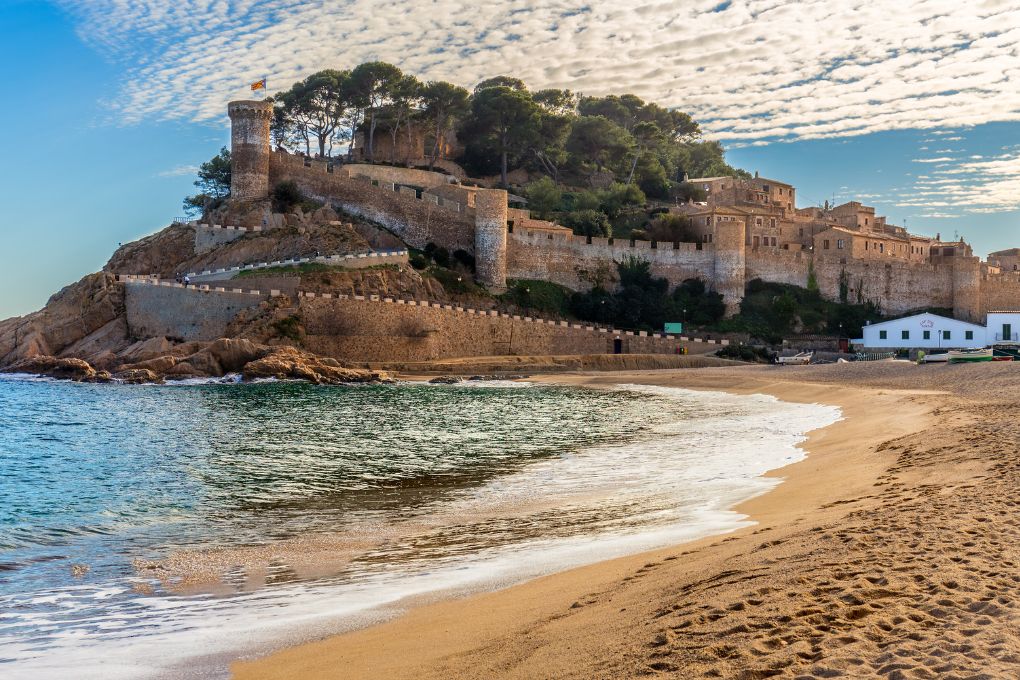
Tossa is a step beyond the others — it's not on the Rodalies train, but it's worth a mention because no list of beaches near Barcelona is honest without it. Tossa sits on the southern Costa Brava, about 90 minutes from Barcelona, and it's one of the most photogenic coastal towns in Catalonia: a sweep of golden-sand beach (Platja Gran) backed by Vila Vella, the only intact medieval fortified town on the Catalan coast, with stone walls and watchtowers rising straight from the sea.
How to get there: the easiest option is the direct coach from Barcelona's Estació del Nord (around 1h 20min by Pujol or Sagalés). Alternatively, take the R1 train to Blanes and connect with a local bus along the coast — slower, but lovely scenery.
Where to eat: Tossa has a strong tradition of cim i tomba — a local fisherman's stew of potatoes, fish and aioli — that you won't find in Barcelona. Look for it on menus in the old town. The smaller restaurants tucked inside Vila Vella's stone streets are generally better than the seafront ones on Platja Gran.
Worth a full day, not a half-day. Pair it with a swim at the smaller adjacent cove, Cala Bona, accessible by a short walk from the main beach.
Best Beaches Near Barcelona for Families
If you're traveling with kids, not every beach near Barcelona works equally well. Some have rough water, no shade, or restaurants that don't quite understand "we need to eat by 1pm." These three do.
Castelldefels — the easiest family choice
20 minutes by train from Plaça Catalunya. A long stretch of fine sand, very shallow water for the first 50 metres, lifeguards in summer, and family-friendly restaurants right behind the promenade. Strollers roll easily on the sand. Public bathrooms and showers. If you're traveling with kids under 8, this is the obvious answer.
Best for: ages 0–10, accessibility, no-stress logistics.
Sitges (Platja de la Ribera) — beach plus a real town
35 minutes by train. The town beach has a wide promenade with ice cream shops, public bathrooms, and easy beach exit to the old town for lunch. The big advantage over Castelldefels: when the kids get tired of the sand, there's an actual town to explore — and shaded narrow streets to escape the midday sun.
Best for: families with mixed ages, parents who want a town to wander.
Calella — long sandy beach with full amenities
75 minutes north on the R1. The trip is longer but the beach is huge, water is calm, and the town has every family service you could need (pharmacies, supermarkets, ice cream, beach toys). Less postcard-pretty than Sitges, but more practical for a full beach day with kids.
Best for: longer family beach days, no fuss.
Heading to any of these in July or August? Read our Barcelona summer survival guide first — the Mediterranean sun is more intense than most visitors expect, and small kids burn fast.
Hidden Beaches Near Barcelona Locals Love
If you've already done the obvious choices and want something quieter, here are three lesser-known options that locals actually visit on Sunday mornings.
Cala Morisca (near Caldetes)
A small cove just north of Caldes d'Estrac. Take the R1 to Caldetes, then a 10-minute walk along the coast. Almost no tourists, crystal-clear water, and a rocky shore that protects from waves. Bring everything you need — no restaurants on the beach itself, but the town is a short walk away.
Garraf — the iconic but underrated cove
Yes, Garraf is in this article already, but it deserves a second mention here: most visitors blow past it on their way to Sitges. The white-and-blue boathouses, the small protected cove, the calm water — Garraf is the kind of place locals come back to season after season. Two train stops before Sitges. Get off, swim, eat grilled fish, repeat.
Cala Bona (Tossa de Mar)
If you've made the trip to Tossa, walk 15 minutes north from Platja Gran to find Cala Bona — a small rocky cove with turquoise water and almost no one on it. The locals who summer in Tossa swim here, not on the main beach. Bring snorkel gear: the rocks are full of small Mediterranean fish.
A Local's Honest Advice
- Avoid August if you can. July and August are when the beaches near Barcelona get genuinely packed. June, early July, and September are the sweet spot: warm sea, fewer crowds, lower prices.
- Eat at Spanish hours. Lunch starts at 14:00, not 12:30. If you sit down at a beach restaurant at 1pm you'll get a slightly impatient waiter; at 2pm you'll get the full Sunday family treatment.
- Don't skip the vermut. A small glass of vermouth with an olive, before lunch, on a sunny terrace, is the most Catalan thing you can do at the beach. It's not a problem here. It's just Sunday.
- Reserve weekend lunches in advance. Especially in Sitges, Garraf and Sant Pol. The good places fill up by midday on Saturday and Sunday.
- Mind the sun. Mediterranean UV is no joke in July and August — even on the train back, you'll feel it. See our summer survival guide for what to pack.
Plan Your Beach Day Around the Food
The best beach days near Barcelona aren't really about the beach — they're about a long, unhurried lunch in between two swims. Where you stay shapes how easy this is to do: if you're based near Passeig de Gràcia or Sants you're a few minutes from either commuter line. For more on choosing where to base yourself, see our guide to the best areas to stay in Barcelona.
And if you'd rather have a born-and-raised local handle the food side of the day — pointing you at the right restaurant, the right dish, the right wine — that's exactly what our Barcelona food tours are for.
Want to experience Barcelona through its food, markets and local neighbourhoods?
Discover our Barcelona food toursFAQ: Beaches Near Barcelona
Platja de Castelldefels, on the R2 Sud line, is the easiest day trip — about 25 minutes from central Barcelona, and the station is less than 200 metres from a long, fine-sand beach.
Easily. The R2 Sud train runs every 20–30 minutes from Barcelona Sants and Passeig de Gràcia, taking around 35–40 minutes each way. Many locals do exactly this on summer weekends: train down for lunch and a swim, train back in the evening.
Castelldefels and Calella are both excellent family options: long sandy beaches, calm water, plenty of restaurants and amenities. Castelldefels is the easiest (just 20 minutes by train, station 200 metres from the sand). Caldes d'Estrac is a quieter alternative for families who prefer something more low-key.
Sitges and Sant Pol de Mar both have outstanding food scenes — Sitges for cava and traditional Catalan seafood, Sant Pol for a small village with a serious gastronomic reputation. Both are a proper destination for lunch as well as the beach.
Yes. The most loved by locals are Cala Morisca (a 10-minute walk from Caldetes station on the R1), Garraf cove (two stops before Sitges on the R2), and Cala Bona near Tossa de Mar. All three are quieter alternatives to the bigger, more touristy options.
Yes. The easiest option is the direct coach from Barcelona's Estació del Nord (around 1h 20min, operated by Pujol or Sagalés). You can also take the R1 train to Blanes and connect with a local bus along the coast. Tossa makes a great full-day trip — it's the southernmost stop of the Costa Brava and one of the most photogenic spots in Catalonia.
June and September are ideal: warm sea, sunny weather, and far fewer crowds than July and August. May and early October are still beautiful but the water is cooler.
Yes. All beaches in this guide have calm Mediterranean waters with very mild currents. Castelldefels, Sitges, and Calella have lifeguards in high season (June–September). The main thing to watch for is the Mediterranean sun, not the water — UV is intense from late June through August.
Barcelona's beaches are closer than you think.
Real beaches, real lunches, real Catalan food. We can show you in person.
Book your Barcelona food tour