

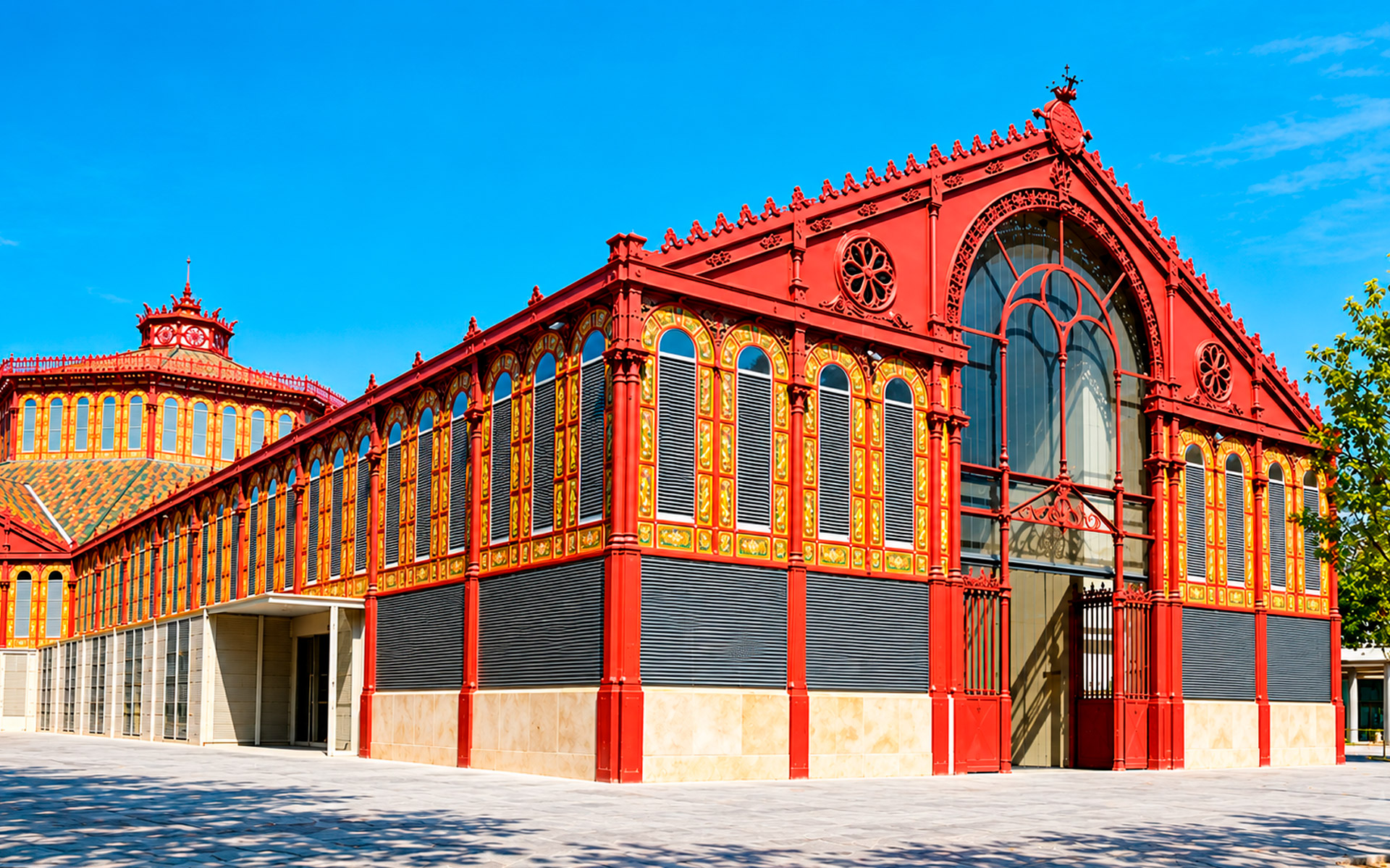
Sant Antoni Market is one of the best places in Barcelona to understand how a neighbourhood market still fits into everyday city life. Inside you'll find fresh food stalls selling meat, fish, fruit, vegetables and other local products. Around the building, Sant Antoni has developed into one of Barcelona's most interesting areas for food, vermut, cafés and traditional breakfasts.
But Mercat de Sant Antoni is more than a food market. The building brings together several different traditions, from everyday grocery shopping to clothing and household goods, while on Sundays the area around the market fills with books, comics, stamps and collectibles.
If you're interested in Barcelona food culture beyond La Rambla and the most obvious tourist stops, Sant Antoni is a neighbourhood worth making time for.
Sant Antoni Market at a Glance
Why Visit Sant Antoni Market?
Barcelona has dozens of municipal markets, and each one reflects the neighbourhood around it. Sant Antoni stands out because of its scale, its architecture and the different types of market activity that have developed around the same building.
It is also a useful place to see Barcelona's food culture in context. Instead of approaching the market as a list of things to taste, spend some time looking at what people are buying, what's in season and how the stalls change throughout the year.
That's what makes markets interesting: they tell you what a city eats when nobody is designing the experience specifically for visitors.
Sant Antoni also sits in an excellent food neighbourhood. After visiting the market, you can continue exploring the surrounding streets for traditional bars, bakeries, vermut, casual restaurants and cafés.
A Short History of Mercat de Sant Antoni
Sant Antoni Market was designed by Catalan architect Antoni Rovira i Trias and built between 1872 and 1882. It was one of the major iron market structures created as Barcelona expanded beyond its old medieval walls.
The huge cross-shaped building occupies an entire city block between Comte d'Urgell, Tamarit, Comte Borrell and Manso. Its iron structure is one of the clearest examples of the great municipal markets that appeared across Barcelona during the nineteenth century.
The old market closed in 2009 for a major renovation. The works became more complex after archaeological remains were discovered beneath the building, including sections connected to the old city fortifications and earlier historical layers.
The restored Mercat de Sant Antoni finally reopened in May 2018, preserving its historic structure while modernising the market for everyday use.
One Building, Different Markets
One of the most interesting things about Sant Antoni is that talking about "the market" can actually mean several different experiences.
1. The Fresh Food Market
This is the part most food travellers will want to explore. The interior is home to traditional stalls selling fruit and vegetables, fish, meat, charcuterie and other everyday ingredients.
Rather than trying to rush through it, look at what's in season and compare the different counters. Barcelona's markets are still closely connected to the way many families shop and cook, and seasonal produce remains an important part of Catalan cuisine.
If you want to understand more about the dishes and ingredients you'll encounter around the city, our guide to what to eat in Barcelona is a good place to continue.
2. The Encants and Non-Food Market
Sant Antoni has never been only about food. The market also has a long commercial tradition linked to clothing, household goods and other everyday products.
That mix is part of what makes Sant Antoni different from markets that visitors mainly experience as gastronomic attractions. Its identity has always been connected with neighbourhood commerce as a whole.
3. The Sunday Book and Collectors' Market
Sunday changes the atmosphere completely.
The Mercat Dominical de Sant Antoni specialises in second-hand and out-of-print books, comics, magazines, postcards, stamps, trading cards and other collectibles.
For generations, coming to Sant Antoni on Sunday morning has been a Barcelona ritual for readers, collectors and families browsing the stalls.
If you love books, comics or simply markets with a very different personality, Sunday is worth experiencing. The Sunday market's own website currently lists opening hours of approximately 08:30 to 14:00.
What to Eat at Sant Antoni Market and Around the Neighbourhood
Sant Antoni is one of our favourite Barcelona neighbourhoods for food because it gives you several different sides of local eating culture within a relatively small area.
Inside the market, look for seasonal ingredients, cheeses, cured meats, olives, preserved seafood and the products that appear in traditional Catalan cooking.
Around the market, the neighbourhood offers a mixture of old-school bars and newer restaurants. The useful thing isn't trying to tick off a list of famous addresses. It's understanding the rhythm: coffee in the morning, a proper breakfast, vermut before lunch, a menú del día and shared plates later in the day.
Sant Antoni also appears in our guide to the best Barcelona neighbourhoods for food and drink, alongside areas such as El Born, Gràcia and Poble-sec.
What Is an Esmorzar de Forquilla?
If there's one Catalan food tradition that fits Sant Antoni particularly well, it's the esmorzar de forquilla — literally a "fork breakfast".
Forget pastries and a quick coffee. A traditional fork breakfast is a proper cooked meal eaten in the morning, often built around dishes that would look perfectly normal at lunch: stews, grilled meat, sausages, beans, cod, tripe or other substantial dishes depending on the restaurant.
The tradition is closely associated with workers who started early and needed something much more substantial than a light breakfast. Today it remains part of Catalan food culture, particularly in traditional restaurants and market areas.
It is one of those experiences that makes much more sense when you understand the context around it. You're not simply eating a heavy breakfast. You're discovering a different rhythm of eating and a tradition connected to everyday working life in Catalonia.
A local tip
Visit the market hungry. Walk through the stalls first, see what is in season and then sit down for breakfast. Understanding the ingredients before eating them makes the experience much more interesting.
Sant Antoni Market vs La Boqueria
Visitors often ask us which Barcelona market they should visit. The answer depends on what you're looking for.
La Boqueria
Best if you are visiting La Rambla and want to experience Barcelona's most famous market.
It has a huge international reputation and an extraordinary variety of products, but it is also one of the city's best-known visitor attractions.
Sant Antoni
Better if you want to combine a traditional food market with neighbourhood life and explore a part of Barcelona that isn't centred around a single tourist attraction.
The Sunday collectors' market and the connection with local breakfast culture also make it a very different experience.
There is no need to choose one market and declare it "better". They tell different stories about Barcelona.
Sant Antoni Market Opening Hours: When Is the Best Time to Visit?
For food, we recommend going in the morning. The market is active, the food stalls are open and you can combine your visit with breakfast or lunch in the neighbourhood.
The main market currently opens from Monday to Saturday, 08:00 to 20:30. Opening hours can change on public holidays, so check the official listing before making a special journey.
If your priority is books and collectibles, choose Sunday morning for the Mercat Dominical.
How to Get to Sant Antoni Market in Barcelona
Mercat de Sant Antoni is at Carrer del Comte d'Urgell, 1, on the edge of Barcelona's Eixample district.
The easiest metro stops are:
- Sant Antoni – L2
- Urgell – L1
- Rocafort – L1
The neighbourhood is also easy to reach on foot from areas such as Poble-sec, Raval and central Eixample.
If you're considering staying nearby, our guide to where to stay in Barcelona includes Sant Antoni and explains who the neighbourhood suits best.
Explore Sant Antoni With a Local
Want to go beyond walking around the market on your own? Our Sant Antoni experience combines the market with local products, neighbourhood stories and a traditional Catalan fork breakfast.
Discover the Sant Antoni Market & Fork Breakfast TourIs Sant Antoni Market Worth Visiting?
Yes — particularly if food is one of the reasons you're visiting Barcelona.
Sant Antoni gives you something slightly different from Barcelona's most famous sights. You're visiting an important historic building, but you're also seeing a market that still forms part of the neighbourhood around it.
Come for the architecture, stay for the food, and leave enough time to explore the streets around the market rather than heading straight back to the centre.
Sant Antoni Market: Frequently Asked Questions
What are Sant Antoni Market opening hours?
The main Mercat de Sant Antoni currently opens Monday to Saturday from 08:00 to 20:30. It is closed as a regular food market on Sundays, although the specialist Sunday book and collectors' market takes place around the market.
What happens at Sant Antoni Market on Sundays?
Sunday is dedicated to the Mercat Dominical de Sant Antoni, with stalls selling second-hand and out-of-print books, comics, magazines, stamps, postcards, trading cards and other collectibles.
Is Sant Antoni Market better than La Boqueria?
They offer different experiences. La Boqueria is Barcelona's most famous market and is very convenient if you're visiting La Rambla. Sant Antoni is better suited to travellers who want to combine a food market with neighbourhood life, local breakfast traditions and the Sunday collectors' market.
What is a Catalan fork breakfast?
An esmorzar de forquilla is a traditional substantial Catalan breakfast eaten with a knife and fork. Instead of pastries, it can include cooked dishes such as grilled meat, stews, sausages, beans, cod or other hearty food.
Can I visit Sant Antoni Market on a food tour?
Yes. Barcelona Born & Bred offers a 2.5-hour Sant Antoni Market & Fork Breakfast Tour on selected dates, usually starting around 10:00. The experience combines the market, local food culture and a traditional Catalan breakfast.