
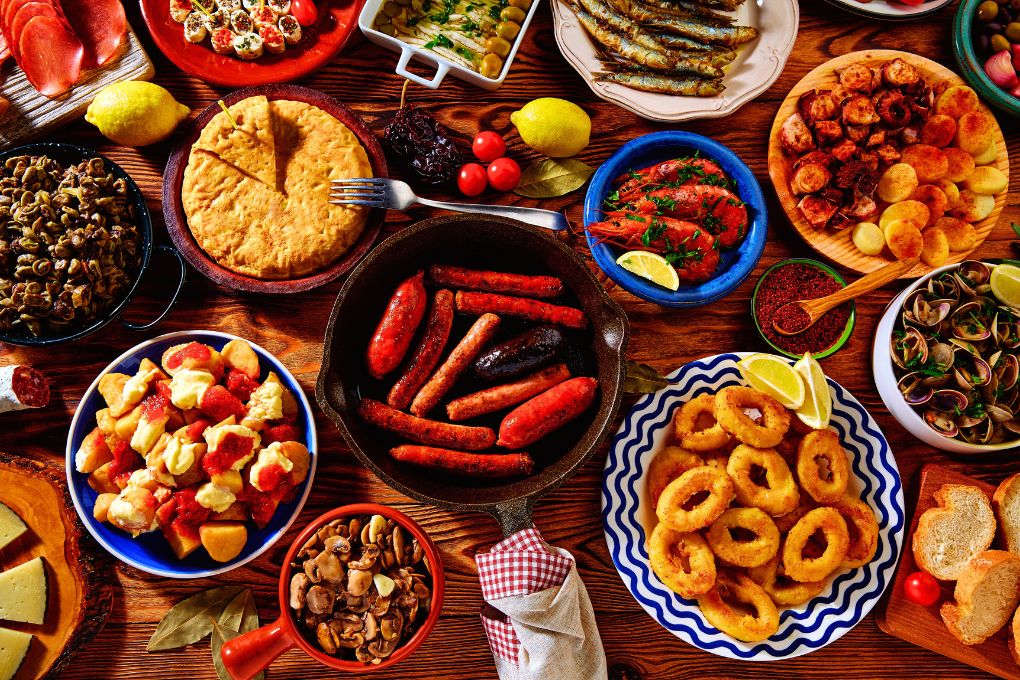
There's a Spanish word you won't find on most tourist itineraries, but it's the key to eating well in Barcelona: tapeo. It isn't a dish or a restaurant — it's a verb, a ritual, a way of spending an evening. Learn what tapeo really means and you'll stop eating like a visitor and start eating like a local.
What Does "Tapeo" Actually Mean?
Tapeo comes from the verb tapear — to go out for tapas. But it means something more specific than just "eating tapas". Tapeo is the act of moving from bar to bar, having one or two small plates and a drink at each, rather than sitting down for a full meal in one place.
Think of it as a moving feast. You have a vermouth and a plate of olives at one bar, walk five minutes to the next for some patatas bravas and a glass of wine, then drift to a third for anchovies and a beer. The walking between stops is part of it. The changing scenery is part of it. Standing at the bar instead of sitting at a table is part of it.
When a Barcelonian says "vamos de tapeo" ("let's go for a tapeo"), they're not just proposing dinner — they're proposing an evening.
Tapeo vs. a Sit-Down Meal: Why It Matters
Most visitors to Barcelona find one tapas restaurant, sit down, order everything at once, and call it a night. That's a perfectly nice dinner — but it isn't tapeo, and it misses the whole point.
The magic of tapeo is variety and movement. Each bar in Barcelona has its speciality: one is famous for its bomba, another for its hand-cut ham, another for its house vermouth. By moving between them, you get the best of each instead of settling for one kitchen's version of everything. You also get the rhythm of the city — the streets, the squares, the buzz of locals doing exactly the same thing.
Tapeo is also, by design, social and unhurried. Nobody rushes. You're not waiting for a table to turn. You eat standing, you talk, you move on when you feel like it.
How to Do Tapeo Like a Local: A Step-by-Step
Start late
Locals rarely begin their tapeo before 7:30 or 8pm, and weekend tapeo can start even later. If you arrive at a bar at 6pm and it's empty, that's not a hidden gem — it's tourist timing. Embrace the local clock and you'll find the good places alive.
Order small, order often
The whole idea is not to fill up at the first stop. One or two platillos (small plates) and a single drink per bar. Leave wanting a little more — that's your cue to move to the next place.
Stand at the bar
In many traditional spots, the bar is where the action is — and often where the tapas are freshest, laid out right in front of you. Sitting at a table can even cost more in some places. For proper tapeo, claim your spot at the counter.
Drink what the locals drink
Vermouth (vermut) before a meal, a young Catalan white or a glass of cava with seafood, a small beer (una caña) to keep things light. Each drink suits a moment. Ordering a large cocktail mid-tapeo marks you as a visitor.
Keep moving
The single most important rule. Don't settle in for three hours at one bar. Two plates, one drink, pay, walk, repeat. Three to five stops is a classic tapeo. The walk between them clears the palate and shows you the city.
Want to learn tapeo from someone who grew up doing it?
See our Tapas & Wine TourWhere to Go for Tapeo in Barcelona
Tapeo isn't the same everywhere — each neighbourhood has its own character. The best areas for a proper tapeo:
- El Born — medieval streets packed with traditional bodegas and modern tapas spots, close together and perfect for hopping on foot.
- Gràcia — a village-like neighbourhood with a strong local identity, small squares, and bars where you'll be surrounded by Barcelonians, not tourists.
- Poble-sec — Carrer de Blai is famous for its pintxo and tapeo scene, relaxed and genuinely local.
- Sant Antoni — the market neighbourhood, increasingly one of the city's best areas for eating and drinking like a local.
For a deeper look at what to order and where, see our local guide to the best tapas in Barcelona and our guide to the best food neighbourhoods.
The Easiest Way to Learn Tapeo
Here's the honest truth: tapeo takes confidence. Knowing which bar does the best bomba, when to arrive, what to order, how to claim your spot at the counter — it's the kind of local knowledge that usually takes years of living here to build.
That's exactly what a food tour shortcuts. On our Tapas & Wine Tour, a born-and-raised guide takes you on a real tapeo through El Born and the Gothic Quarter — the right bars, the right order, the right drinks, the stories behind each stop. You don't just eat; you learn how to do it yourself for the rest of your trip.
FAQ: Tapeo in Barcelona
Tapeo comes from the Spanish verb tapear, meaning to go out for tapas. Specifically, it refers to bar-hopping — having one or two small plates and a drink at several different bars in one evening, rather than sitting down for a full meal in a single restaurant.
Locals usually start their tapeo between 7:30 and 9pm on weekdays, and often later at weekends. Arriving before 7pm generally means empty bars and a tourist schedule. Embrace the local timing for the best atmosphere.
A classic tapeo covers three to five bars, with one or two small plates and a single drink at each. The idea is variety and movement — sampling each bar's speciality rather than filling up in one place.
The best neighbourhoods for tapeo are El Born (traditional bodegas and modern spots close together), Gràcia (village-like and genuinely local), Poble-sec (especially Carrer de Blai), and Sant Antoni (the market district). These areas have bars close enough to hop between on foot.
A tapas tour is a guided tapeo. It follows the same bar-hopping ritual, but with a local guide choosing the bars, the order and the drinks, and explaining the story behind each stop — a shortcut to doing tapeo confidently on your own for the rest of your trip.
Ready to go for a tapeo?
Our small-group Tapas & Wine Tour is a real Barcelona tapeo, led by a guide who grew up doing it.
Explore our food tours